
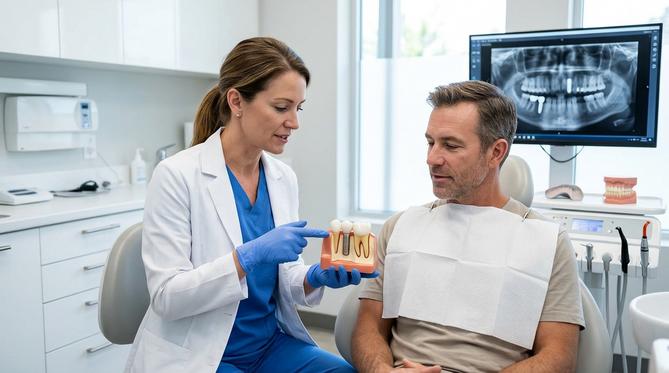
Losing a tooth can impact everything from your confidence to your ability to enjoy your favorite foods. For years, the most common solutions were dental bridges and dentures. While effective, they aren’t the only options available today. Modern dentistry offers a revolutionary alternative that functions much like a natural tooth: dental implants. But what truly sets them apart from other tooth replacement methods? Understanding the fundamental differences can help you make an informed decision about restoring your smile.
Unlike bridges or dentures that sit on top of the gums or rely on adjacent teeth for support, a dental implant is designed to become a permanent part of your jaw. This unique approach provides a level of stability and function that other options simply cannot match.
The Foundation: How a Dental Implant Works
The key to a dental implant’s success lies in its design, which mimics the structure of a natural tooth root. The implant itself is a small, screw-like post, typically made of biocompatible titanium. It is surgically placed into the jawbone where the missing tooth once was. Over several months, a remarkable process called osseointegration occurs, where the bone fuses directly with the implant post. This creates an incredibly strong and stable foundation. Once healed, a connector piece called an abutment is attached to the post, and a custom-made crown is placed on top, completing the restoration.
The Dental Implants Difference: Key Advantages
Choosing a tooth replacement option is a significant decision. When comparing dental implants to traditional bridges and dentures, several key advantages become clear. Understanding these can help clarify why they are often considered the gold standard in modern tooth replacement.
- Jawbone Preservation: When a tooth is lost, the jawbone in that area begins to shrink due to lack of stimulation. Dental implants are the only tooth replacement option that stimulates the bone like a natural root, helping to prevent bone loss and maintain your facial structure.
- Protection of Adjacent Teeth: A traditional dental bridge requires the teeth on either side of the gap to be filed down to support the restoration. A dental implant is a standalone solution that does not require altering or placing stress on healthy neighboring teeth.
- Unmatched Stability: Because they are fused with the jawbone, dental implants do not slip or shift the way removable dentures sometimes can. This allows you to eat, speak, and laugh with complete confidence, just as you would with your natural teeth.
- Long-Term Durability: While bridges and dentures may need to be replaced over time, dental implants are designed to be a long-lasting solution. With proper oral hygiene and regular dental checkups, they have the potential to last a lifetime.
Are You a Candidate for Dental Implants?
While dental implants offer significant benefits, they may not be the right choice for everyone. Ideal candidates generally have good overall health, sufficient jawbone density to support the implant, and healthy gums. Conditions like uncontrolled diabetes or a history of certain medical treatments may affect healing. The only way to know for sure is through a comprehensive evaluation. During a consultation at Your Dental Office, our team can assess your oral health, discuss your goals, and determine if dental implants are a suitable option for your specific needs.
Making the decision to replace a missing tooth is a step toward restoring your oral health and confidence. The Professional and highly skilled team from Your Dental Office is here to help with your dental needs. We are committed to providing clear information and personalized care to help you find the best solution for your smile.
If you’re considering tooth replacement and want to learn more about how dental implants can help, contact Your Dental Office today to schedule a consultation. We look forward to helping you explore your options.