
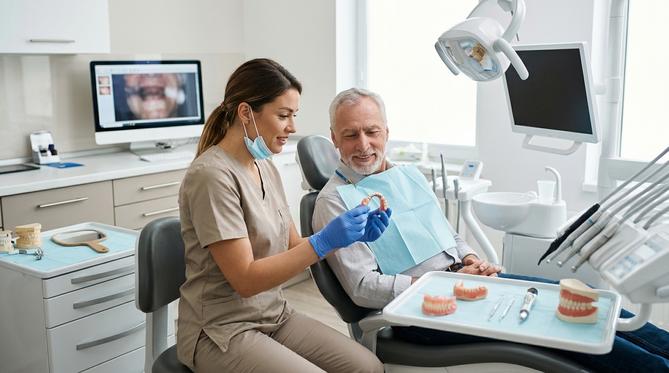
Making the decision to restore your smile with dentures is a significant and positive step toward improving your oral health, function, and confidence. Whether you are considering full or partial dentures, it’s important to understand that there will be an adjustment period. Knowing what to expect can make the transition smoother and more comfortable. This guide will walk you through the initial stages of wearing new dentures and partials, offering tips to help you adapt with confidence.
What to Expect in the First Few Weeks
When you first receive your new dentures, they will likely feel unfamiliar. This is a completely normal part of the process. You might experience a few common sensations as your mouth adapts:
- A feeling of fullness: Your tongue and cheek muscles need time to get used to the new appliance in your mouth.
- Minor soreness or irritation: As your gums adjust, you may notice some tender spots. This is why follow-up appointments are crucial.
- Increased saliva flow: Your mouth may initially react to the denture as if it were food, temporarily producing more saliva. This sensation typically subsides within a few days.
It’s essential to follow the wear schedule recommended by your dentist. At Your Dental Office, we schedule follow-up visits to check the fit and make any necessary adjustments to ensure your comfort and prevent sore spots from developing.
Relearning How to Eat and Speak
Eating and speaking are two of the biggest adjustments when you get new dentures and partials. Patience is key. Start slowly and give yourself time to build confidence. For eating, begin with soft foods cut into small, manageable pieces. Try to chew slowly using both sides of your mouth to keep the denture stable. Gradually, you can reintroduce harder foods as you become more comfortable.
Speaking may also feel different at first. Certain words might be challenging to pronounce. A great way to adapt is to practice by reading aloud or speaking slowly in front of a mirror. Your tongue and facial muscles will quickly learn how to form sounds correctly with the denture in place. Most patients find that their speech returns to normal within a couple of weeks.
Caring for Your New Dentures and Gums
Proper care is vital for the longevity of your dentures and the health of your mouth. Just like natural teeth, dentures require daily cleaning to remove food particles and plaque. You should brush your dentures daily with a soft-bristled denture brush and a non-abrasive denture cleaner. When you are not wearing them, especially overnight, it’s important to soak them in a denture solution to keep them from drying out.
Don’t forget to care for your gums, too. Gently brush your gums, tongue, and the roof of your mouth every morning and evening with a soft toothbrush. This removes plaque and stimulates circulation in the tissues. If you have a partial denture, it’s especially important to maintain excellent hygiene for your remaining natural teeth.
Your Partner in Tooth Replacement
The journey to a restored smile is a partnership between you and your dental team. While the adjustment period for dentures and partials can have its challenges, a well-fitting appliance can dramatically improve your quality of life. Never hesitate to contact your dentist if you experience persistent pain or if your denture feels loose. The Professional and highly skilled team from Your Dental Office is here to help with your dental needs.
If you’re missing teeth and want to explore your options, we are here to provide a personalized evaluation. Contact Your Dental Office today to schedule a consultation and learn more about how custom dentures and partials can help you smile with confidence again.