
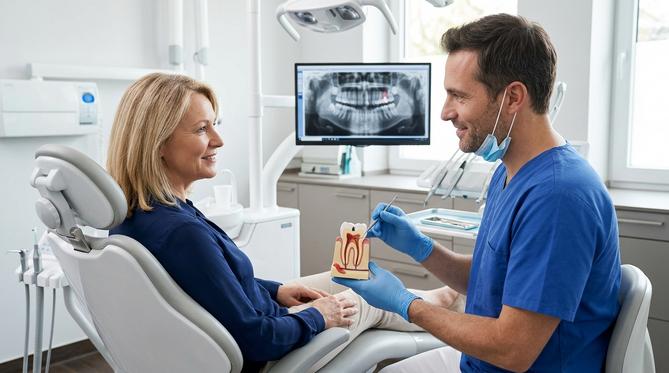
Hearing the phrase “root canal” can make some people feel nervous, but the reality of modern root canal treatment is far from the myths you might have heard. This common dental procedure is not about causing pain—it’s about relieving it. When the soft tissue inside your tooth, known as the pulp, becomes inflamed or infected, this treatment can save your natural tooth from extraction and put an end to significant discomfort. At Your Dental Office, we want our patients to feel informed and comfortable about their care, so let’s walk through what you can expect.
Why Might Root Canal Treatment Be Recommended?
When a tooth’s pulp is damaged, it cannot heal on its own. This damage can happen because of deep decay, a crack or chip in the tooth, or an injury. When bacteria get inside, it can lead to a painful infection or an abscess. While some cases have no obvious symptoms, common signs that you might need to discuss with your dentist include:
- A severe, persistent toothache, especially when chewing or applying pressure.
- Prolonged sensitivity to hot or cold temperatures that lingers after the source is removed.
- Swelling and tenderness in the nearby gums.
- Discoloration or darkening of the tooth.
- A recurring pimple-like bump on the gums near the tooth.
It’s important to remember that these symptoms can have various causes. A thorough professional evaluation, including an examination and X-rays when necessary, is the only way to determine if root canal treatment is the right step for your specific oral health needs.
The Root Canal Treatment Process: Step-by-Step
The primary goal of a root canal is to remove the infected pulp, clean and disinfect the inside of the tooth, and then fill and seal it to prevent reinfection. The process is much more straightforward than most people imagine. First, your dentist will ensure the area is completely numb using local anesthesia. Your comfort is a top priority throughout the procedure.
Once you are comfortable, a small opening is made in the crown of the tooth to access the pulp chamber. Using specialized instruments, your dentist will carefully remove the damaged pulp from the pulp chamber and the canals inside the roots. After the pulp is removed, the inside of the tooth is thoroughly cleaned, shaped, and disinfected. Finally, the cleaned space is filled with a rubber-like, biocompatible material. The opening in your tooth is then closed with a temporary filling to protect it until your final restoration appointment.
What to Expect After Your Appointment
After your root canal treatment, it’s normal to experience some mild sensitivity or tenderness for a few days, especially if there was pain or infection before the procedure. This discomfort is typically manageable with over-the-counter pain medication. You should avoid chewing on the treated tooth until it is permanently restored.
A tooth that has had a root canal loses its nerve and blood supply, which can make it more brittle over time. For this reason, most teeth that undergo root canal treatment will need a permanent restoration, such as a dental crown, to protect them from fracturing and restore them to full function. This final step is crucial for the long-term success of the treatment.
Preserving Your Natural Smile for the Long Term
The greatest benefit of root canal treatment is that it allows you to save your natural tooth. Keeping your tooth helps maintain your natural bite, prevents other teeth from shifting out of position, and preserves the appearance of your smile. With proper care, including diligent brushing, flossing, and regular dental check-ups, a tooth treated with a root canal and crown can last a lifetime.
If you are experiencing persistent tooth pain, don’t let dental anxiety stop you from getting the care you need. The Professional and highly skilled team from Your Dental Office is here to help with your dental needs. We are committed to providing gentle, effective care to restore your oral health and comfort.
Contact Your Dental Office today to schedule an evaluation and discuss how we can help you find relief from tooth pain.