
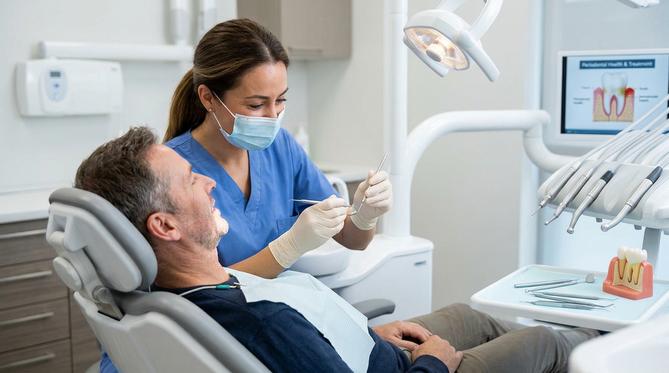
Hearing that you need more than a standard dental cleaning can be concerning, but it’s an important step toward protecting your oral health. If your dentist has mentioned gum disease, you may have also heard the terms “scaling and root planing.” This procedure, often called a deep cleaning, is a fundamental and highly effective non-surgical gum disease treatment designed to stop the progression of periodontal disease and restore gum health. Understanding what this treatment involves can help you feel more comfortable and confident in your care.
Why a Standard Cleaning Isn’t Always Enough
A regular dental cleaning, or prophylaxis, focuses on removing plaque and tartar from the surfaces of your teeth above the gum line. This is excellent for maintaining healthy gums and preventing gum disease. However, once gum disease (gingivitis or the more advanced periodontitis) begins, bacteria, plaque, and tartar can accumulate below the gum line. This creates deep pockets between your teeth and gums, where bacteria thrive and cause inflammation, bleeding, and even bone loss. A standard cleaning cannot reach these deep areas. This is where scaling and root planing becomes necessary to access and clean these pockets thoroughly.
Understanding the Scaling and Root Planing Procedure
Scaling and root planing is a meticulous, two-part process performed by a dentist or dental hygienist to treat periodontal disease. The primary goal is to remove the source of the infection so your gums can begin to heal.
- Scaling: This is the process of carefully removing all the plaque and tartar (hardened plaque) deposits from your tooth surfaces, both above and, most importantly, below the gum line. Your dental professional will use specialized instruments to clean all the way down to the bottom of the periodontal pockets.
- Root Planing: After the teeth are clean, the root surfaces are smoothed out. This step is crucial because it makes it more difficult for new plaque and bacteria to attach, and it helps your gums reattach firmly to the clean, smooth tooth roots.
To ensure your comfort, the procedure is typically done with a local anesthetic to numb the area being treated. Depending on the extent of the condition, your dentist at Your Dental Office may recommend treating one or two quadrants of your mouth at a time.
Is This Gum Disease Treatment Right for You?
Scaling and root planing is recommended for patients diagnosed with periodontitis. This diagnosis is made after a comprehensive periodontal evaluation, which includes measuring the depth of the pockets around your teeth. Symptoms that might indicate the need for this gum disease treatment include:
- Gums that bleed easily when brushing or flossing
- Swollen, red, or tender gums
- Gums that have pulled away from the teeth (recession)
- Persistent bad breath
- Deep gum pockets measured during an exam
It’s important to remember that these signs can have various causes. A professional evaluation at Your Dental Office is the only way to determine the precise cause and the most appropriate course of action for your specific oral health needs.
Life After a Deep Cleaning: Maintenance and Care
Following a scaling and root planing procedure, you can expect your gums to heal and become healthier. You might experience some temporary tooth sensitivity or minor tenderness, which usually subsides quickly. The most critical part of long-term success is follow-up care. This includes a commitment to excellent at-home oral hygiene and attending regular periodontal maintenance appointments. These maintenance cleanings are more in-depth than standard cleanings and are scheduled more frequently to ensure the disease remains under control.
By addressing periodontal disease with treatments like scaling and root planing, you are taking a vital step toward protecting not just your teeth and gums, but your overall health. The Professional and highly skilled team from Your Dental Office is here to help with your dental needs.
If you have noticed bleeding gums or are concerned about your gum health, don’t wait for the problem to worsen. Contact Your Dental Office today to schedule a comprehensive evaluation and discuss the best gum disease treatment options for you.