
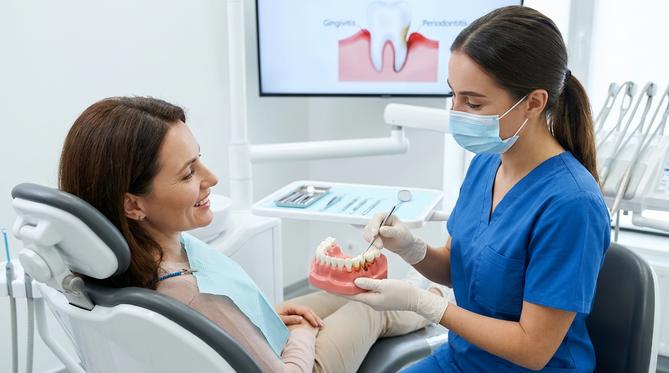
Have you ever noticed a little pink in the sink after brushing your teeth? While it might seem minor, bleeding gums are often the first signal that something is amiss with your gum health. This common symptom can be an early warning sign of gum disease, a progressive condition that affects the tissues supporting your teeth. Understanding its stages, from mild gingivitis to advanced periodontitis, is the first step toward seeking the right professional care and effective gum disease treatment.
What is Gingivitis? The First, Reversible Stage
Gingivitis is the earliest and most common form of gum disease. It is an inflammation of the gums primarily caused by the buildup of plaque, a sticky film of bacteria, along the gumline. If not removed by daily brushing and flossing, this plaque can irritate the gum tissue. The good news is that gingivitis is completely reversible with professional care and improved oral hygiene at home.
Key signs of gingivitis include:
- Gums that are red, swollen, or tender to the touch
- Gums that bleed easily during brushing or flossing
- Persistent bad breath
At this stage, the infection has not yet reached the bone and connective tissues that hold your teeth in place. A professional dental cleaning and a consistent home care routine are often enough to resolve the issue.
When Gingivitis Progresses to Periodontitis
If gingivitis is left untreated, the inflammation can advance to a more serious stage called periodontitis. At this point, the inner layer of the gum and bone pull away from the teeth, forming small spaces called pockets. These pockets collect debris and can become infected. As the body’s immune system fights the bacteria, the toxins and the body’s own enzymes start to break down the bone and connective tissue that hold teeth in place. If not treated, the teeth can become loose and may eventually need to be removed.
The Importance of Professional Gum Disease Treatment
Unlike gingivitis, periodontitis requires professional intervention to stop its progression. The goal of gum disease treatment is to thoroughly clean the pockets around the teeth and prevent further damage to the surrounding bone. At Your Dental Office, our team can perform a comprehensive periodontal evaluation to assess your gum health and determine the most appropriate treatment plan.
A common non-surgical treatment for early-stage periodontitis is a deep cleaning procedure called scaling and root planing. This involves removing tartar and bacteria from tooth surfaces and beneath the gums (scaling) and smoothing the tooth roots (planing) to help the gums reattach to the teeth. Ignoring the signs of periodontitis can have serious consequences, making professional diagnosis and timely gum disease treatment essential for protecting your oral health.
Maintaining Your Gum Health After Treatment
Successfully managing gum disease is a long-term commitment and a partnership between you and your dental team. After your initial treatment, it is crucial to maintain excellent oral hygiene habits at home, including brushing twice a day and flossing daily. We may also recommend more frequent professional cleanings, known as periodontal maintenance, to keep the disease under control. These appointments are vital for preventing the re-population of harmful bacteria and ensuring your gums stay healthy.
Don’t wait for symptoms to worsen. Addressing gum health concerns early provides the best opportunity for a successful outcome. The Professional and highly skilled team from Your Dental Office is here to help with your dental needs.
If you have noticed bleeding gums, persistent bad breath, or other signs of gum disease, we encourage you to take the next step. Contact Your Dental Office today to schedule your comprehensive periodontal evaluation and discuss your options for gum disease treatment.