
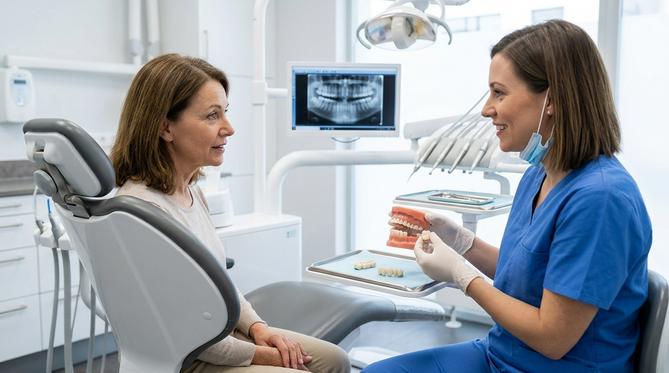
When a tooth is damaged or missing, it can affect everything from your ability to chew comfortably to your confidence in your smile. Fortunately, modern dentistry offers reliable solutions to restore both function and appearance. Two of the most common and effective options are dental crowns and bridges. While they are often discussed together, they serve very different purposes. Understanding the distinction is the first step toward reclaiming a healthy, complete smile.
If you’re dealing with a compromised tooth or a gap in your smile, you might be wondering which path is right for you. Is a crown the answer, or is a bridge the more appropriate treatment? The choice depends entirely on your specific dental situation, and a professional evaluation is essential. At Your Dental Office, we help patients understand their options for restorative care every day.
What Is a Dental Crown? Restoring a Single Damaged Tooth
Think of a dental crown as a custom-made cap that fits securely over an entire tooth, right down to the gum line. Its primary job is to protect and strengthen a tooth that has been structurally compromised. A crown restores the tooth’s original shape, size, strength, and appearance. You may be a candidate for a dental crown if you have:
- A tooth with a very large filling and not enough natural tooth structure remaining.
- A tooth that is severely worn down, cracked, or broken.
- A tooth that has undergone root canal therapy, which can make it more brittle.
- A misshapen or severely discolored tooth that doesn’t respond to whitening.
By covering the damaged tooth, a crown effectively shields it from further harm while allowing you to bite and chew normally. It’s a way to save a natural tooth that might otherwise be lost.
What Is a Dental Bridge? Filling the Gap from a Missing Tooth
A dental bridge, on the other hand, is designed specifically to replace one or more missing teeth in a row. As the name suggests, it “bridges” the gap left behind. A traditional bridge consists of one or more artificial teeth, called pontics, which are held in place by crowns attached to the natural teeth on either side of the gap. These anchoring teeth are called abutment teeth.
A bridge is a fixed restoration, meaning it is not removable like a partial denture. It becomes a permanent part of your smile, restoring your ability to chew properly, preventing remaining teeth from shifting out of position, and supporting your facial structure. The main reason for choosing a bridge is to address tooth loss and fill an empty space.
Making the Right Choice: How Dental Crowns and Bridges Differ
The fundamental difference comes down to this: a crown repairs and saves an existing tooth, while a bridge replaces a missing one. During a consultation, your dentist will perform a thorough examination, which may include X-rays, to determine the health of your teeth and jaw. The decision-making process involves evaluating whether the problem tooth can be saved or if it’s already gone. If a tooth is present but severely damaged, a crown is the likely solution. If a tooth is missing entirely, a bridge (or a dental implant) would be the restorative option to consider.
What to Expect from Treatment
The process for both dental crowns and bridges is quite similar. It typically involves at least two visits. During the first visit, the dentist prepares the anchor tooth or teeth, takes precise impressions to create your custom restoration, and places a temporary crown or bridge. At the second appointment, the temporary is removed, and your final, custom-made restoration is carefully fitted, adjusted, and cemented into place. Our team at Your Dental Office ensures you are comfortable and informed throughout every step of the process.
Deciding on the best way to restore your smile is a significant decision. Understanding the roles of dental crowns and bridges can help you feel more prepared for a conversation with your dentist. The Professional and highly skilled team from Your Dental Office is here to help with your dental needs. We are dedicated to finding the solution that best fits your oral health and goals.
If you have a damaged or missing tooth, don’t wait for the problem to worsen. Contact Your Dental Office today to schedule a consultation and learn more about your restorative dentistry options.