
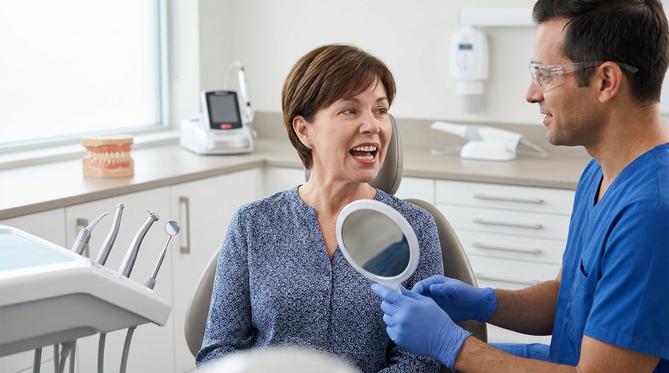
Receiving a new set of dentures is a significant step toward restoring your smile and improving your ability to chew. However, it’s completely normal to feel a bit awkward at first. Your mouth has to adapt to a new appliance, and this adjustment period affects two of our most fundamental activities: eating and speaking. Understanding what to expect and having a few tips on hand can make the transition to your new dentures and partials a much smoother and more confident experience.
Navigating Mealtimes with Your New Dentures
Learning to eat with dentures takes patience. Your bite will feel different, and you may be less sensitive to hot foods and liquids. The key is to start slow and allow your muscles to adapt to holding the denture in place as you chew.
Here are a few tips to help you get started:
- Begin with soft foods. For the first few days, stick to a soft-food diet. Things like yogurt, mashed potatoes, scrambled eggs, and smoothies are excellent choices. This gives your gums time to adjust without putting too much pressure on them.
- Cut food into small pieces. As you begin to introduce more solid foods, make sure to cut them into small, manageable bites. This makes chewing easier and reduces the work your jaw has to do.
- Chew on both sides. Try to distribute food evenly on both sides of your mouth when you chew. This helps keep your denture stable and prevents it from tipping or becoming dislodged.
- Be cautious with sticky or hard foods. Foods like tough meats, hard candies, and sticky caramels can be challenging. It’s best to avoid them initially and reintroduce them carefully once you feel fully confident with your dentures.
Finding Your Voice: Speaking Clearly with Dentures and Partials
Just like eating, speaking with a new dental appliance requires a period of adjustment. Certain words, especially those with “s” or “f” sounds, might seem difficult to pronounce at first, and you might notice a slight lisp. This is temporary and will improve with practice as your tongue and facial muscles learn to work with your new dentures and partials.
To speed up the process, try reading a book, magazine, or newspaper aloud to yourself each day. Speaking slowly and deliberately will help you enunciate more clearly. You can also practice speaking in front of a mirror to see how your mouth moves. Remember, your voice probably sounds much more different to you than it does to anyone else. With a little practice, your speech will return to normal quickly.
The Importance of a Proper Fit
A comfortable and secure fit is essential for successfully adapting to your dentures. A well-made denture should feel stable and should not cause persistent sore spots. If your denture feels loose, clicks when you talk, or causes ongoing irritation, it’s a sign that it may need an adjustment. A proper fit not only enhances comfort but also improves your ability to eat and speak with confidence. The team at Your Dental Office takes great care to ensure your appliance is custom-fitted to your unique anatomy, making follow-up adjustments as needed to achieve optimal comfort and function.
Your Partner in Restoring Your Smile
Adjusting to a new life with dentures is a journey, not a race. Be patient with yourself, practice regularly, and don’t hesitate to reach out for professional support when you need it. Maintaining good oral hygiene by cleaning your appliance daily and gently brushing your gums and tongue will also contribute to your overall comfort and success. The Professional and highly skilled team from Your Dental Office is here to help with your dental needs.
If you are considering tooth replacement options or need help adjusting to your current appliance, we are here to provide guidance and personalized care. Contact Your Dental Office today to schedule a consultation and learn more about how dentures and partials can help restore your smile and confidence.