
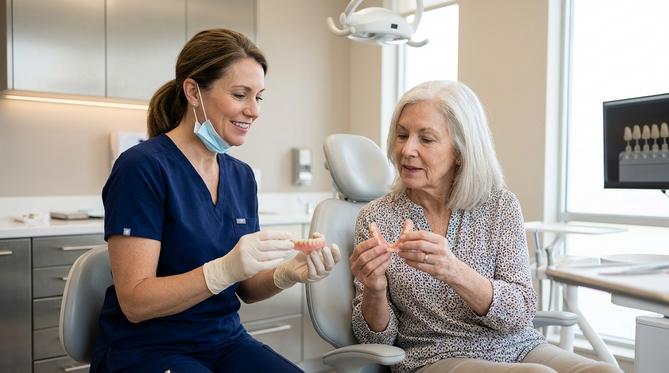
Receiving new dentures is an exciting step toward restoring your smile’s function and appearance. Whether you’ve chosen a full set or a partial, this personalized solution can significantly improve your quality of life. However, just like a new pair of shoes, your mouth needs time to adapt. Understanding the adjustment period is key to a successful and comfortable transition. This initial phase is a normal part of the process for anyone with new dentures and partials, and knowing what to expect can make it much smoother.
Your New Smile: Eating and Speaking
Two of the biggest adjustments you’ll make involve eating and speaking. Initially, your new dentures may feel a bit bulky or strange, which can temporarily affect how you talk. Practicing speaking by reading aloud or talking to a friend can help your tongue and facial muscles adapt more quickly. You may notice a slight lisp at first, but this typically resolves within a few weeks.
When it comes to eating, start slow. Begin with soft foods that are easy to chew, such as mashed potatoes, yogurt, and soups. As you become more confident, you can gradually introduce firmer foods. Cut your food into small, manageable pieces and try to chew on both sides of your mouth to keep the denture stable. Avoid very hard, sticky, or chewy foods during the initial adjustment period to prevent discomfort or dislodging your appliance.
Managing Comfort with New Dentures and Partials
It is common to experience some minor soreness or irritation as your gums and mouth get used to the pressure of a new dental appliance. Your gums are adapting to supporting the denture, and tender spots may develop. If you experience persistent or significant pain, it’s important not to ignore it. A simple adjustment from your dentist can often provide immediate relief. Never try to adjust your dentures yourself, as this can cause irreparable damage and affect the fit.
You may also notice an increase in saliva production at first. This is a natural reaction to having something new in your mouth, and it will subside as your brain gets used to the presence of your dentures and partials. Wearing your dentures as much as possible, as instructed by your dentist, will help speed up this adaptation process.
Daily Care and Oral Hygiene
Proper care is essential for the longevity of your dentures and the health of your mouth. It’s important to establish a good routine right away. Your daily care should include:
- Cleaning your dentures: Brush them daily with a soft-bristled denture brush and a non-abrasive denture cleaner. This removes plaque and food particles, preventing stains and odor.
- Soaking your dentures: When not wearing them, keep your dentures in a soaking solution or plain water to prevent them from drying out and warping.
- Caring for your mouth: Even with full dentures, you must clean your gums, tongue, and the roof of your mouth with a soft brush or cloth to stimulate circulation and remove plaque.
Partnering with Your Dental Team
The adjustment period for dentures and partials varies for everyone, but patience is key. Regular follow-up appointments are crucial to ensure a proper fit and address any concerns as they arise. Your dentist can make small adjustments that make a big difference in your comfort and confidence. If you have questions about your tooth replacement options or are ready to explore a solution for missing teeth, the team at Your Dental Office is here to provide personalized guidance. The Professional and highly skilled team from Your Dental Office is here to help with your dental needs.
Ready to discuss how dentures can restore your smile? Contact Your Dental Office today to schedule a consultation and learn more about your options for a healthy, functional smile.