
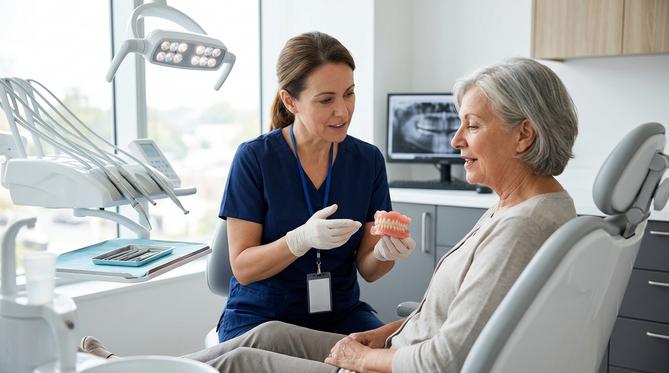
Deciding to get dentures is a positive step toward restoring your smile, improving your ability to chew, and boosting your confidence. Whether you are considering full or partial dentures, it’s important to understand that there will be an adjustment period as your mouth gets used to the new appliance. Knowing what to expect can make this transition smoother and more comfortable. For many patients, getting new dentures and partials is a life-changing experience, and a little patience in the beginning goes a long way.
The First Few Weeks: Initial Sensations and Adaptation
When you first receive your dentures, they will likely feel a bit strange. It’s common to experience a sensation of fullness in your mouth or feel like the dentures are bulky. You might also notice an increase in saliva production. These are all normal reactions as your gums, tongue, and facial muscles learn to accommodate the new appliance. Some minor irritation or soreness is also possible as your tissues adapt. However, persistent or severe pain is not normal and should be addressed. Your mouth is incredibly adaptable, and these initial feelings typically subside within a few weeks as you grow accustomed to wearing your dentures.
Learning to Eat with Your New Dentures and Partials
Eating will feel different at first, and it requires some practice. The key is to start slowly and be patient with yourself. We recommend beginning with a diet of soft foods that are easy to chew, such as mashed potatoes, yogurt, and soups. As you become more comfortable, you can gradually introduce more solid foods. Here are a few tips to make eating easier:
- Cut your food into very small, manageable pieces.
- Try to chew slowly and deliberately on both sides of your mouth to keep the denture stable.
- Be cautious with hot foods and liquids, as the denture can insulate your mouth, making it harder to judge temperature.
- Avoid extremely sticky, hard, or chewy foods in the early stages, as they can dislodge or damage your dentures.
Speaking and Pronunciation Adjustments
Just like eating, speaking with new dentures requires a period of adjustment. Certain words or sounds, especially ‘s’ and ‘f’ sounds, may be difficult to pronounce clearly at first. You might notice a slight lisp or a change in the sound of your voice. This is temporary. The best way to overcome this is to practice. Try reading a book or newspaper aloud to yourself. Singing along to the radio can also help. The more you speak, the faster your tongue and muscles will adapt, and your speech will return to normal.
Caring for Your Gums and Your New Appliance
Proper care is essential for the comfort of your mouth and the longevity of your dentures. It’s crucial to remove your dentures every night to give your gums and underlying bone a chance to rest. This helps prevent irritation and allows your tissues to stay healthy. Clean your dentures daily with a soft-bristled brush and a non-abrasive denture cleaner to remove food particles and plaque. You should also continue to brush your gums, tongue, and the roof of your mouth to stimulate circulation and maintain good oral hygiene. A proper care routine will ensure your dentures fit well and feel comfortable for years to come.
When to Schedule a Follow-Up Visit
While a period of adjustment is normal, a well-fitting denture should not cause ongoing pain. The bone and gums in your mouth can change over time, which may affect the fit of your dentures and partials. If you experience persistent sore spots, a clicking sound when you talk, or feel that your denture is consistently loose, it’s time to schedule a visit. At Your Dental Office, we can make necessary adjustments to improve the fit and ensure your comfort. Never try to adjust your dentures yourself, as this can cause irreparable damage. The Professional and highly skilled team from Your Dental Office is here to help with your dental needs.
If you are exploring tooth replacement options or need assistance with your existing dentures, we are here to provide personalized and compassionate care. Contact Your Dental Office today to schedule a consultation and learn more about how we can help you smile confidently.